.png)
How UCP Integrates Therapy and Education: A Holistic Model

For many years, the standard approach for students requiring specialized support was the “pull-out” model. In this approach, students leave their classrooms, miss core instruction, and work on therapeutic goals in a separate setting with a therapist. While the intention is to provide focused care, the result often leads to a fragmented school day and a disconnect between therapeutic goals and academic achievement.
At the UCP Institute, we advocate for a different future: the Holistic, Integrated Model. By removing the silos between therapy and education, we create a learning environment where support does not interrupt the school day, it becomes the foundation of it.
At the center of the holistic model is a shift from isolated services to integrated, push-in therapy. In this research-based approach, speech, occupational, and physical therapists do not pull students out of the classroom; instead, they enter the general education setting as equal members of the instructional team.

No Instructional Loss
Students remain present for grade-level instruction, ensuring they do not have to choose between reaching therapy goals and academic growth.
Generalization of Skills
When students learn communication or mobility skills in the same environment where they are expected to use them, skill generalization occurs more quickly and effectively.
Benefits for All
When therapists support teachers within the classroom, their expertise often benefits every student, not just those receiving services. Strategies designed for one learner frequently become effective tools for the entire class.
An effective holistic model relies on intentional collaboration. General education teachers, special education teachers, and therapists plan and operate as a unified team, sharing responsibility for student success.
At the UCP Institute, we will share tools that make this level of collaboration possible, including:
Differentiated Planning Templates: Supporting co-planning that aligns academic standards with therapeutic goals
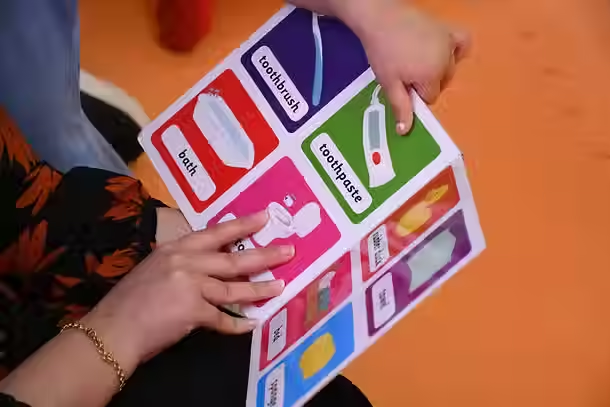
Visual Support Systems: Therapist-designed tools that increase accessibility for all learners
Co-Teaching Strategies: Clearly defining teacher and therapist roles during instruction to ensure seamless delivery
By integrating therapy directly into the classroom, we are not simply providing “support”; we are fostering a sense of belonging for all students.

Comments